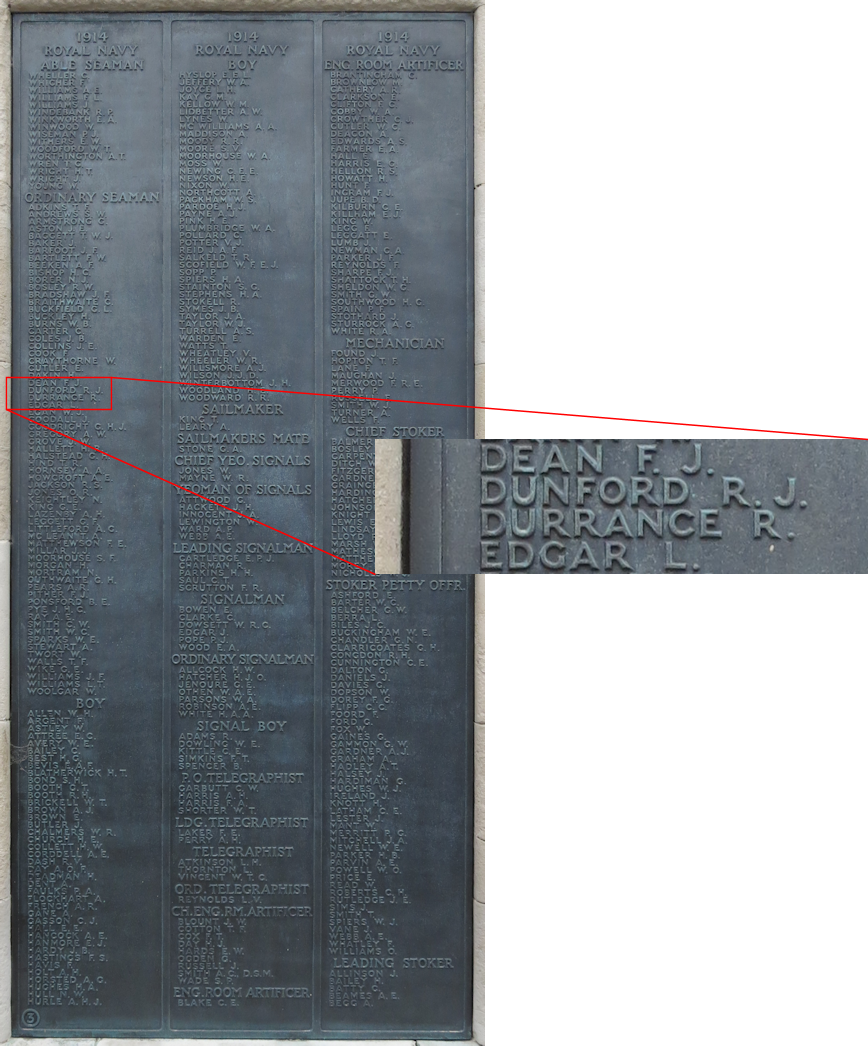
Reginald was promoted to Ordinary Seaman and was transferred to H.M.S.
Bulwark, in November 1913. He died on 12 November 1914, when H.M.S.
Bulwark was sunk in the Medway Estuary.
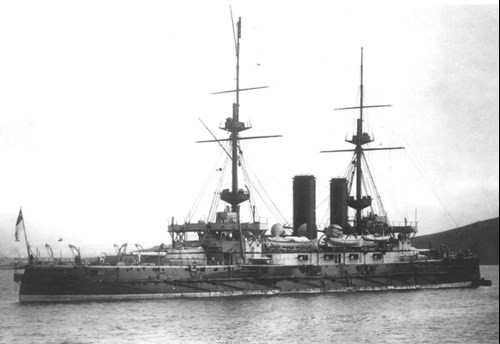
H.M.S. Bulwark was part of the 5th Battle Squadron and at the outbreak of
the war was based at Sheerness in order to protect the South East of England
from the threat of a German invasion.
On Thursday 26 November 1914, she was moored in the Medway Estuary
approximately between East Hoo Creek and Stoke Creek when, at 7.50am a
massive explosion ripped through the vessel. The Times reported: "The band
was playing and some of the men were drilling on deck when the explosion occurred. A great
sheet of flame and quantities of debris shot upwards, and the huge bulk of the vessel lifted
and sank, shattered, torn, and twisted, with officers and men aboard..."
|
 |
Boats of all kinds were launched from the nearby ships and shore to pick up
survivors and the dead. Work was hampered by the amount of debris which
included hammocks, furniture, boxes and hundreds of mutilated bodies.
Fragments of personal items showered down in the streets of Sheerness.
Initially 14 men survived the disaster, but some died later from their injuries.
One of the survivors, an able seaman, had a miraculous escape. He said he was on the deck of the Bulwark when the explosion occurred. He was blown into the air, fell clear of the debris and managed to swim to wreckage and keep himself afloat until he was rescued. His injuries were slight.
The CWGC database names 788 men from H.M.S. Bulwark as having lost their lives in this explosion. There was only a handful of survivors. Of the fourteen men to survive, most were seriously injured. Miraculously there were a very few who came through this without injury, having been blown out of an open hatch. One of these survivors, Able Seaman Marshall described feeling a “colossal draught” and, as he flew through the air, seeing the Bulwark’s masts shaking. Other witnesses were on the battleship H.M.S. Implacable, which was moored next to Bulwark, they described:
|
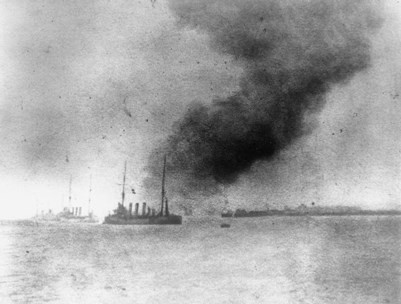
The aftermath of the explosion of H.M.S. Bulwark
|